
Community
Rose Benavidez secures seat as Starr County judge, unofficial results show
By Isabella Reyes
Advertisement · Why this ad?
Elena Torres is a health and wellness journalist with a decade of experience, having previously worked for El Paso Times. She holds a degree in Public Health from the University of Texas at El Paso and focuses on community health issues that matter locally.
More from Elena →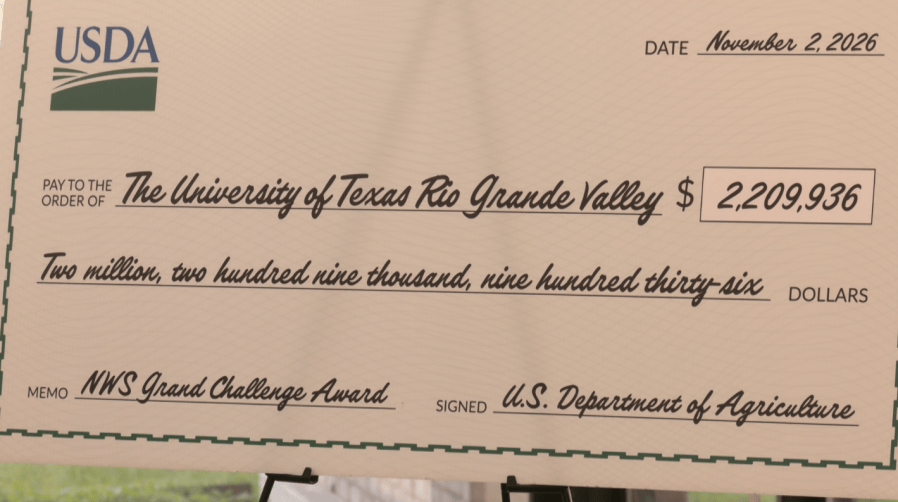
As the sun rose over the University of Texas Rio Grande Valley (UTRGV) Edinburg campus, a sense of hope filled the air. Monica De La Cruz, a dedicated advocate for agricultural advancement, stepped forward to announce a significant milestone for the region. With a smile, she presented a $2.2 million federal grant aimed at combating the New World screwworm, a pest that poses a serious threat to livestock and, consequently, the livelihoods of many families across South Texas.
On a bright Monday morning, De La Cruz, representing the U.S. Department of Agriculture, officially awarded the grant to UTRGV for groundbreaking research on the New World screwworm. This funding is set to bolster efforts to develop effective management strategies against this invasive species, which has wreaked havoc on livestock health and agricultural productivity in the region.
The New World screwworm, scientifically known as Cochliomyia hominivorax, is notorious for infesting warm-blooded animals, leading to severe economic losses for farmers and ranchers. With the grant, UTRGV researchers are poised to explore innovative solutions, including biological control methods and genetic research, to mitigate the impact of this pest.
"This funding is not just about science; it’s about the families and communities that depend on agriculture for their survival," De La Cruz stated during the announcement. Her words resonated deeply, emphasizing the grant’s significance beyond mere numbers.
The New World screwworm is more than just a pest; it represents a substantial threat to livestock health in the Rio Grande Valley. Infestations can lead to severe infections, which can ultimately result in the death of affected animals. This not only impacts farmers' incomes but also the broader agricultural economy.
Historically, the screwworm was eradicated from the United States in the 1960s through a successful sterilization program that utilized the release of sterile males. However, the pest has re-emerged in various regions, including parts of Texas, prompting renewed concern among agricultural experts and farmers alike.
UTRGV researchers, led by Dr. John M. E. Dyer, are expected to utilize the grant to study the screwworm's biology and behavior. By understanding its lifecycle and reproductive patterns, scientists hope to develop more effective control measures that can be implemented at the local level, providing much-needed relief to struggling ranchers.
The announcement of the grant has been met with enthusiasm from the local community, particularly among those in the agricultural sector. Farmers and ranchers have expressed relief that significant resources are being allocated to address a problem that has plagued them for years.
Local rancher Maria Gonzalez shared her thoughts on the grant. "This is a game-changer for us. We’ve been battling screwworms for too long, and knowing that there’s a team working on solutions gives us hope," she said, her voice filled with gratitude.
Community leaders have also chimed in, emphasizing the importance of agricultural research for the region’s economy. The Rio Grande Valley is known for its rich agricultural landscape, and pests like the New World screwworm can threaten the stability of this vital sector. The grant is seen as a proactive step towards safeguarding the future of farming in South Texas.
Support for the research initiative extends beyond just farmers. Local organizations, such as the Rio Grande Valley Chamber of Commerce, have expressed their backing for UTRGV’s efforts. The chamber recognizes that agricultural health is directly tied to the economic prosperity of the region.
"We are thrilled to see this grant awarded to UTRGV. It’s an investment in our community’s future," said chamber president, Robert Garcia. His sentiments reflect a growing awareness of the interconnectedness between agriculture, economy, and community well-being.
With the grant in hand, UTRGV is set to embark on a multi-faceted research project that will take place over the next several years. The research team plans to collaborate with local farmers, agricultural experts, and government agencies to ensure that the findings are applicable and beneficial to the community.
Dr. Dyer and his team will focus on several key areas, including the development of sustainable pest management practices and the exploration of genetic solutions to control screwworm populations. The ultimate goal is to create a framework that not only addresses the current infestation but also prevents future outbreaks.
Moreover, UTRGV aims to engage the community through educational outreach programs. These initiatives will inform local farmers about best practices for pest management and provide resources to help them implement new strategies effectively.
The implications of this research extend far beyond the immediate threat posed by the New World screwworm. By investing in agricultural research, UTRGV is contributing to the long-term sustainability of farming in the Rio Grande Valley. Healthy livestock means a more stable economy, which in turn supports families and communities.
As the research progresses, it is expected to attract attention from agricultural stakeholders across the nation. Successful strategies developed in South Texas could serve as a model for other regions facing similar challenges, showcasing the innovative spirit of local researchers and farmers.
Additionally, the grant aligns with broader efforts to enhance food security and promote sustainable agricultural practices. In a world where climate change and pest resistance are growing concerns, initiatives like this are vital for ensuring a resilient agricultural sector.
As the community eagerly anticipates the outcomes of this research, local farmers are encouraged to take advantage of available resources. UTRGV is committed to sharing knowledge and findings with the agricultural community, ensuring that everyone can benefit from the advancements made.
Farmers can access information through the Texas A&M AgriLife Extension, which provides valuable resources on pest management and agricultural best practices. Additionally, local agricultural fairs and workshops will be organized to facilitate knowledge sharing and community engagement.
As the research unfolds, UTRGV plans to establish a dedicated online portal where farmers can access research updates, best practices, and educational materials tailored to their needs.
In conclusion, the $2.2 million grant awarded to UTRGV for New World screwworm research is more than just funding; it represents a commitment to the future of agriculture in the Rio Grande Valley. By addressing this critical issue, the university is not only protecting livestock but also strengthening the fabric of the community. As families rely on agriculture for their livelihoods, initiatives like this pave the way for a more prosperous and sustainable future.
By Isabella Reyes

By Rosa Martinez

By Isabella Reyes

By Isabella Reyes