
Community
New all-inclusive playground now open in McAllen
By Rosa Martinez
Advertisement · Why this ad?
Isabella Reyes, a Texas A&M University graduate, has spent the last six years covering community events and local culture for various Texas publications. Her passion for storytelling drives her to showcase the vibrant spirit of the Corpus Christi area.
More from Isabella →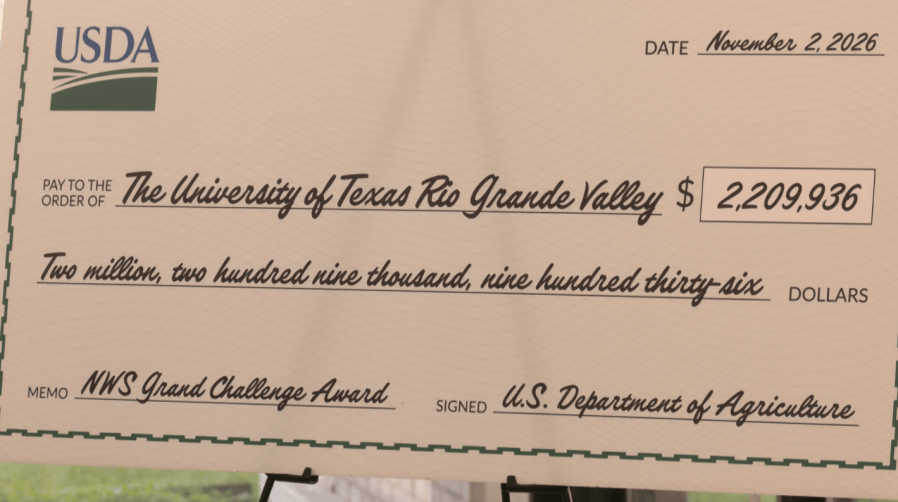
On a bright Monday morning, the atmosphere buzzed with excitement at the University of Texas Rio Grande Valley (UTRGV) Edinburg campus. Students and faculty gathered as Monica De La Cruz, a dedicated advocate for agricultural advancement, stepped forward to present a significant grant that could change the landscape of local farming forever. The $2.2 million federal grant from the U.S. Department of Agriculture is earmarked for critical research aimed at combating the New World screwworm, a pest that has plagued livestock and threatened the livelihoods of farmers across the region.
Monica De La Cruz's visit marked a pivotal moment for UTRGV and the agricultural community in the Rio Grande Valley. The grant will support innovative research initiatives focused on the New World screwworm, a parasitic insect known for infesting livestock, particularly cattle. This invasive species can cause severe economic losses, making it crucial for researchers to find effective control methods.
During the presentation, De La Cruz emphasized the importance of collaboration between universities, government agencies, and local farmers. "This grant not only provides essential funding but also fosters partnerships that are vital for our agricultural future," she stated. The funds will enable UTRGV to enhance its research capabilities, bringing together experts in entomology, veterinary medicine, and agricultural science.
UTRGV has long been at the forefront of agricultural research in South Texas, and this grant is a testament to their commitment to tackling pressing issues affecting the local economy. The university plans to use the funding to develop new strategies for controlling the screwworm population, which has been a persistent threat since its reintroduction to the U.S. in the 1970s.
The announcement of the grant has been met with enthusiasm from local farmers and community leaders. Many expressed relief and optimism that this research could lead to effective solutions for a problem that has caused significant financial strain over the years. "We’ve been dealing with screwworms for far too long, and this funding gives us hope that we can finally tackle this issue head-on," said a local rancher who has witnessed the devastating effects of screwworm infestations.
Community members are rallying behind UTRGV's efforts, understanding that the success of this research could mean the difference between thriving farms and struggling ones. Farmers rely heavily on cattle for their livelihoods, and the screwworm poses a direct threat to their businesses. The sentiment echoed across social media, with many praising the university's initiative and the federal support it has received.
Local agricultural organizations are also stepping up to lend their support. The Texas Farm Bureau and other groups are collaborating with UTRGV to ensure that the research findings are disseminated effectively to farmers. This partnership aims to create a robust network of information sharing, empowering farmers with the knowledge they need to protect their livestock.
To grasp the significance of this grant, it’s essential to understand the New World screwworm itself. This pest lays its eggs in open wounds of animals, and the larvae feed on the tissue, leading to severe infections and even death if left untreated. The economic impact is staggering; losses can accumulate quickly, causing ripple effects throughout the agricultural sector.
Historically, the U.S. faced a significant screwworm crisis during the mid-20th century, prompting extensive eradication efforts. However, the pest resurfaced in the 1970s, and its presence has continued to threaten livestock health. Research funded by this grant will focus on developing new control methods, including biological controls and improved monitoring techniques.
With the grant secured, UTRGV is poised to launch a series of research projects aimed at understanding and mitigating the impact of the New World screwworm. The university plans to assemble a team of experts who will work collaboratively to explore innovative solutions. This multi-disciplinary approach will not only enhance the scientific understanding of the pest but also provide practical tools for farmers.
As UTRGV embarks on this critical research journey, the implications extend beyond just pest control. Success in managing the New World screwworm could lead to revitalized confidence among local farmers, encouraging investment in the agricultural sector. Additionally, the findings could serve as a model for addressing other agricultural challenges faced across the nation.
Community members are optimistic that this research will pave the way for a sustainable agricultural future. By investing in science and education, UTRGV is not only addressing immediate concerns but also fostering a culture of innovation that can benefit generations to come.
For those looking to stay informed about the developments stemming from this grant, UTRGV will provide regular updates through their website and social media channels. Farmers and ranchers are encouraged to engage with the university, attend workshops, and participate in discussions to learn more about the research findings and practical applications.
In addition to UTRGV, local organizations such as the Texas Farm Bureau and the Texas Animal Health Commission will play crucial roles in disseminating information and resources to the farming community. These partnerships will ensure that farmers have access to the latest knowledge and tools necessary to combat the screwworm effectively.
As the research unfolds, UTRGV plans to engage the community through educational initiatives. Workshops and seminars will be organized to inform farmers about the latest research developments and practical applications for livestock management. This proactive approach aims to create a well-informed farming community that can make educated decisions about pest control measures.
Additionally, UTRGV is exploring partnerships with local schools to foster interest in agricultural sciences among young students. By introducing the next generation to the importance of agricultural research, the hope is to inspire future scientists and farmers who can continue the fight against agricultural pests.
The fight against the New World screwworm is not just a local issue; it has national implications. Livestock farming is a critical component of the U.S. agricultural economy, and the effective management of pests like the screwworm is essential for maintaining food security. Success in this research could lead to methodologies that can be replicated in other regions facing similar challenges.
Furthermore, the collaboration between UTRGV, local farmers, and federal agencies exemplifies a model of how community-driven efforts can lead to significant advancements in agricultural practices. This project is not merely about managing a pest; it represents a concerted effort to revitalize an entire sector of the economy that is vital to the region's identity and sustainability.
In conclusion, the $2.2 million grant awarded to UTRGV represents a beacon of hope for the agricultural community in the Rio Grande Valley. With dedicated research and community support, there’s a promising path ahead in the battle against the New World screwworm. Together, we can foster a thriving agricultural environment that honors our traditions and secures our future.
By Rosa Martinez

By Rosa Martinez

By Rosa Martinez

By Isabella Reyes